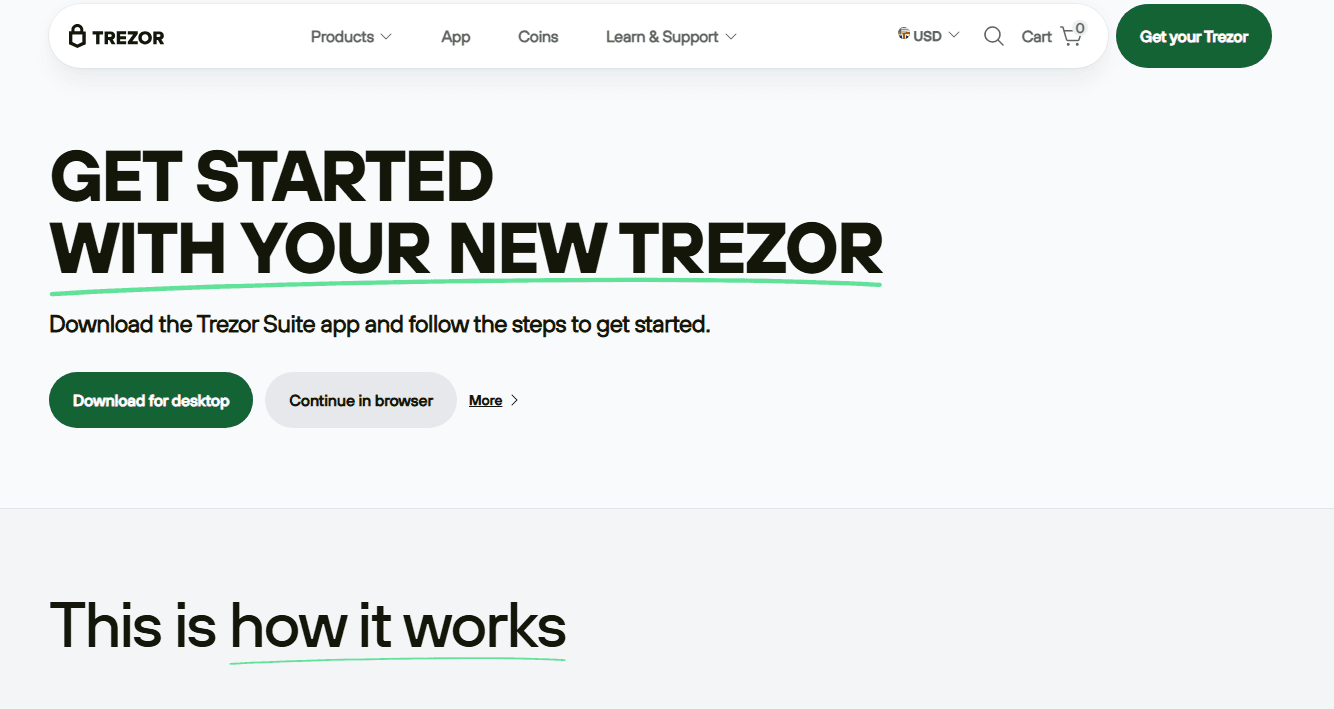
Introduction to Trezor.io/Start
Trezor.io/start is the official onboarding platform designed to help users set up their Trezor hardware wallet securely and correctly. When dealing with cryptocurrencies, proper wallet initialization is essential because it ensures that users maintain full control over their digital assets. Trezor hardware wallets are widely recognized for their strong security model, transparency, and ease of use.
This guide explains everything you need to know about using Trezor.io/start, from connecting your device for the first time to understanding essential security features. Following the official setup process helps prevent mistakes, protects private keys, and ensures a smooth experience when managing cryptocurrencies.
What Is a Trezor Hardware Wallet
A Trezor hardware wallet is a physical device that securely stores cryptocurrency private keys offline. Unlike online or software wallets, Trezor keeps sensitive information isolated from internet-connected devices. This design dramatically reduces the risk of hacking, malware, and phishing attacks.
Trezor wallets are suitable for beginners and advanced users alike because they combine high-level security with a user-friendly interface. Using Trezor.io/start ensures that the wallet is configured properly and according to official security standards.
Why Trezor.io/Start Is Important
Trezor.io/start provides verified instructions directly from the manufacturer, ensuring that users avoid unofficial software, fake devices, or unsafe setup methods. Setting up a hardware wallet incorrectly can lead to permanent loss of funds or compromised security.
By following the guided setup process, users confirm device authenticity, install the correct management software, and learn how to protect their recovery seed. This official onboarding experience minimizes risk and builds confidence from the very beginning.
Connecting and Initializing Your Trezor Device
The setup process begins by connecting the Trezor device to a computer or supported mobile device. Once powered on, the device displays clear instructions on its screen to guide users through the initial steps.
Users are prompted to confirm basic settings such as language and device preferences. During this stage, users choose whether to create a new wallet or recover an existing one using a recovery seed. These steps ensure that the device is functioning correctly and ready for secure configuration.
Installing the Trezor Suite Application
Trezor Suite is the official software used to manage the Trezor hardware wallet. It acts as the central dashboard for viewing balances, managing accounts, sending and receiving cryptocurrencies, and updating firmware.
During setup, users install Trezor Suite and connect it to their device. The application verifies the authenticity of the hardware wallet and ensures that it is safe to use. Trezor Suite supports a wide range of cryptocurrencies and provides a clean, intuitive interface for managing digital assets.
Creating a Secure PIN Code
One of the most important steps during setup is creating a PIN code. The PIN protects the Trezor device from unauthorized physical access and must be entered every time the wallet is unlocked.
The PIN is entered directly on the device using a randomized keypad layout, which prevents keylogging and screen-based attacks. Users are encouraged to choose a strong PIN that is difficult to guess while still being memorable.
If the PIN is entered incorrectly multiple times, the device introduces increasing delays, protecting the wallet from brute-force attempts.
Generating the Recovery Seed
The recovery seed is the most critical security element of a Trezor hardware wallet. It is a unique sequence of words generated during setup that serves as a complete backup of the wallet.
Trezor.io/start instructs users to carefully write down the recovery seed on paper and store it in a safe, offline location. This seed allows users to restore access to their funds if the device is lost, damaged, or reset.
Anyone who gains access to the recovery seed can control the wallet, which is why it must never be shared, photographed, or stored digitally.
Verifying the Recovery Seed
After recording the recovery seed, users are asked to verify it by selecting the correct words in the proper order. This step ensures the seed has been written down accurately and reduces the risk of errors.
Once verification is complete, the recovery seed is not displayed again. This ensures that it remains private and protected from digital exposure.
Adding Cryptocurrency Accounts
Trezor hardware wallets support a wide variety of cryptocurrencies. Using Trezor Suite, users can create individual accounts for each supported asset.
Trezor.io/start guides users through adding accounts step by step. Each account is secured by the hardware wallet, and private keys never leave the device. This approach allows users to manage multiple cryptocurrencies while maintaining strong security.
Users can add or remove accounts at any time without affecting their stored funds.
Sending and Receiving Crypto Securely
Once the wallet is set up, users can send and receive cryptocurrency through Trezor Suite. Every transaction must be confirmed on the Trezor device, adding an extra layer of security.
Transaction details such as recipient address and amount are displayed on the device screen. Users must carefully review and approve each transaction before it is finalized. This confirmation process protects users even if the connected computer or mobile device is compromised.
Firmware Updates and Device Maintenance
Trezor periodically releases firmware updates to improve security and add new features. Trezor.io/start explains how to perform firmware updates safely using Trezor Suite.
Firmware updates require confirmation on the device and do not affect stored funds when completed correctly. Keeping firmware up to date ensures the wallet remains protected against newly discovered vulnerabilities.
Best Security Practices for Trezor Users
Trezor.io/start emphasizes the importance of following strong security habits. Users should keep their recovery seed offline, use a strong PIN, and ensure that Trezor Suite is installed only on trusted devices.
Staying alert to phishing attempts and fake support messages is also essential. Trezor will never ask for recovery seeds or PIN codes. Practicing these security measures helps maintain full control over digital assets.
Why Trezor.io/Start Is Trusted by the Crypto Community
Trezor.io/start is trusted because it provides a transparent, secure, and user-friendly setup experience. The guided onboarding process is designed to educate users while minimizing mistakes.
By combining open-source principles with strong hardware security, Trezor offers a reliable solution for long-term cryptocurrency storage.
Conclusion
Trezor.io/start is the essential first step for anyone using a Trezor hardware wallet. From device initialization and PIN creation to recovery seed protection and asset management, each step is designed to maximize security.
By following the official setup process and practicing good security habits, users can confidently manage their cryptocurrencies with full ownership and peace of mind. Trezor hardware wallets, when properly set up, provide a powerful and trusted solution for protecting digital assets over the long term.